£2.99 for 10 tokens



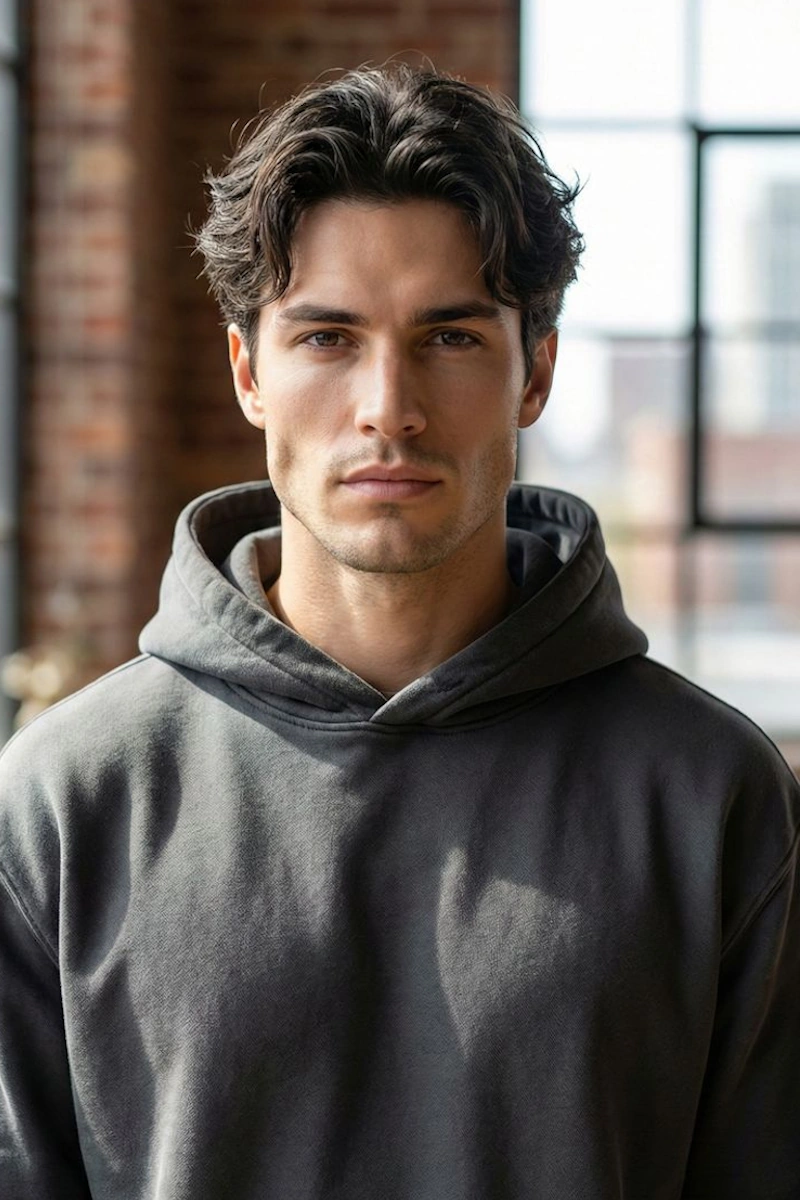
Curtain hair has been everywhere for the past few years and it shows no sign of going anywhere. Centre-parted, face-framing, effortlessly relaxed. It works on most hair types and across genders. Before you book a haircut, here is everything you need to know, plus a way to see how it actually looks on your face before you commit.
Curtain Hair
Who It Suits and How to Style It
The name tells you exactly what the style does. The hair falls to either side of the face, parted in the centre, framing it the way curtains frame a window. That sounds simple because the concept is simple. What makes it work is in the layering underneath, and getting that right is the difference between a style that flows naturally and one that sits flat and shapeless.
Not sure curtain hair is the one for you? Our guide to what you'd look like with different hair lets you compare buzz cuts, pixie cuts, lobs, fades, colour changes, and more on your own photo before you decide.
Try curtain hair on your own photo before booking the appointment. You might love it even more than you expected, or you might decide to go a different direction. Either way, you know before you cut.
Try it before you cut
See curtain hair on your own face
Upload your photo to NeonSnap's free AI Hair Change tool and see how curtain hair looks on you specifically, not on a model with a different face shape.
Try curtain hair free →What Makes It Work
The curtain shape comes from two things working together: the centre parting and face-framing layers. The parting splits the hair and directs it outward. The layers give it movement and remove the bulk that would otherwise make the style sit heavy.
Without enough internal layering, thick or dense hair will push outward rather than fall. The result looks more like a mushroom than a curtain. A good stylist will work through the underneath as much as the surface to get the weight distribution right.
For finer hair, the opposite concern applies. Layers that are too aggressive will make fine hair look wispy rather than full. The key is keeping enough length and density in the ends while still creating the movement that defines the style.
How It Works Across Hair Types
Straight hair
Straight hair shows the shape of the cut most clearly. The layers will sit close to the head and fall smoothly, which emphasises the face-framing structure. This texture benefits most from a blow-dry with a round brush to build volume at the roots and bend the ends slightly inward. Without some root lift, the style can look flat on very straight, fine hair.
Wavy hair
Wavy hair is arguably the best match for the style. The natural texture adds volume and movement to the layers without any styling effort. Air drying produces a relaxed, lived-in result. Using a diffuser on low heat sets the wave pattern without disrupting the overall shape. A small amount of lightweight curl cream through the mid-lengths keeps the waves defined rather than frizzy.
Curly hair
Curtain hair works on curly textures but requires a stylist who understands how to cut curls specifically. Dry cutting or a deva-style cut will preserve the curl pattern and prevent the layers from creating unwanted bulk. When styled, the curls create their own volume and the centre parting develops a natural part over time rather than needing to be forced.
Thick hair
Thick hair suits the style well because there is plenty of hair to work with, but the internal layering becomes even more important. The stylist needs to remove enough weight from the underneath so the hair falls rather than sits. Point cutting or texturising through the ends helps the layers move independently rather than clumping. Finished correctly, thick curtain hair has real presence without looking heavy.
Face Shapes and How to Adapt the Cut
One reason the style has stayed popular is that the cut is adjustable. The length of the layers, the weight of the ends, and how far off-centre the parting sits can all be tweaked to work with different face shapes.
- Oval faces are the most flexible and suit virtually any variation. Most lengths and layer weights work well.
- Round faces benefit from longer layers that carry the eye downward rather than outward, adding visual length to the face.
- Square faces soften with wispy, textured ends rather than blunt layers. The face-framing shape naturally draws attention to the centre and away from a strong jawline.
- Heart-shaped faces work best when volume is kept below the cheekbones. Curtain hair achieves this naturally by letting the layers fall outward from the centre rather than building volume at the top.
- Oblong or long faces suit slightly shorter layers that add width. A touch off-centre on the parting can also reduce the elongating effect of a strict centre part.
lightbulb
Pro tip: If a pure centre parting does not feel right on your face, shifting it a centimetre or two to one side keeps the face-framing effect while softening the symmetry. Most stylists refer to this as a "soft centre part."
How to Style It at Home
The blow-dry method
Apply a lightweight heat protectant to damp hair and rough dry to about 70 percent. Split the hair down the centre and use a medium round brush to direct each side away from the face, rolling the ends slightly under or outward depending on your preference. Work in sections from underneath upward. This builds the shape and volume where you need it without over-drying the ends.
Adding wave and texture
For a more relaxed, textured finish, use a large-barrel curling iron or wand on fully dry hair. Wrap sections away from the face loosely and hold for five to eight seconds. Once all sections are done, brush through the waves gently with a natural bristle brush to break them apart and blend them into the layers. Finish with a light mist of flexible hold spray.
Air drying for natural texture
On wavy or curly textures, air drying often produces the best result. Apply a small amount of curl cream or styling gel through damp hair, scrunch lightly, and leave it alone. Disturbing the hair while it dries encourages frizz. Once fully dry, scrunch out any crunch left by the product to reveal soft, defined texture.
Finishing touches
A small amount of lightweight hair oil worked through the mid-lengths and ends adds shine and definition without weighing the layers down. For fine hair, a dry texture spray at the roots gives lift without product buildup. Avoid heavy creams or oils at the roots regardless of hair type, as they will flatten the volume that makes the style work.
Also on NeonSnap
Try different hair colours alongside the cut
Once you have seen the curtain shape on your photo, you can experiment with colour too. NeonSnap's AI Hair Change tool lets you try balayage, highlights, darker tones, and more, all on your own photo.
Try hair colours free →Curtain Hair for Men
The style has become one of the most requested cuts for men in recent years, largely driven by its appearance on athletes, musicians, and actors. The principle is the same: centre-parted, face-framing, layered for movement. The main differences are in length and how the layers are blended into the sides.
Medium-length curtain hair for men typically sits between the chin and the collarbone. The sides are often tapered or faded to keep the overall shape clean without making the cut look too fashion-forward for everyday wear. Shorter versions, where the hair just reaches the jaw, suit people who want the style but prefer lower maintenance.
Styling for men follows the same logic as for women. A round brush blow-dry builds shape. Air drying on naturally wavy hair works well with minimal product. A small amount of low-shine pomade or styling cream through the ends keeps the layers separated without looking overdone.
Getting the Cut Right
Asking for curtain hair is straightforward. Bringing a reference photo is still worth doing, not because your stylist will not know the style, but because it removes any ambiguity about length, layer weight, and how much texture you want in the ends. The more specific you can be, the better the outcome.
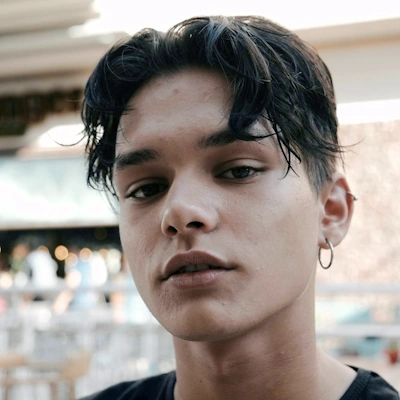
Key things to discuss with your stylist before they start: the length you want the layers to start, how much weight to remove from the underneath, whether you want the ends textured or kept heavier, and whether you are planning to wear it straight or with wave. These details affect how the stylist approaches the layering and will make a real difference to the finished result.
Curtain hair tends to grow out well. The centre parting develops naturally, the layers soften as they grow, and the style remains wearable between cuts. Most people find it needs freshening every eight to twelve weeks, though that depends on how fast your hair grows and how precise you like the ends to look.
Frequently Asked Questions
What is curtain hair?
Curtain hair is a centre-parted style where the hair falls to either side of the face, framing it the way a curtain frames a window. It is built around face-framing layers that taper away from the centre parting, and works across most hair textures and genders. It has remained popular due to its versatility and low-maintenance upkeep.
Does curtain hair suit all face shapes?
It is one of the more universally flattering styles because the layers and parting can be adjusted to suit different face shapes. Oval faces suit most variations. Round faces benefit from longer layers. Square faces soften with textured ends. Heart-shaped faces work well with volume kept below the cheekbones. The centre parting can also be shifted slightly off-centre if a pure centre part does not suit you.
How do you style curtain hair?
The most common approach is a blow-dry using a round brush, directing each side away from the face to build the shape. A small amount of lightweight oil or cream through the mid-lengths and ends adds definition. For texture, a large-barrel curling iron adds loose waves that can be brushed through to break them apart. Wavy and curly textures often work well with just air drying and a little curl cream.
Can you get curtain hair with thick hair?
Yes, thick hair suits the style well. The key is enough internal layering to take weight out of the mid-lengths and ends, so the hair falls rather than sits outward. Without this, thick hair can make the style look heavy. With the right layering, thick curtain hair has real presence and movement.
Is curtain hair high maintenance?
No. It is considered low-to-medium maintenance. The centre parting grows out naturally, and the layers retain their general shape as the hair grows. Most people get a trim every eight to twelve weeks to freshen the ends. Between cuts, the style is easy to manage with minimal product.
What is the difference between curtain hair and curtain bangs?
Curtain bangs refer specifically to a fringe parted in the centre that falls on either side of the face, typically ending around the cheekbones. Curtain hair is a full hairstyle built on the same face-framing principle, with layers running the length of the hair. Curtain bangs can be part of curtain hair, but the two terms describe different things.
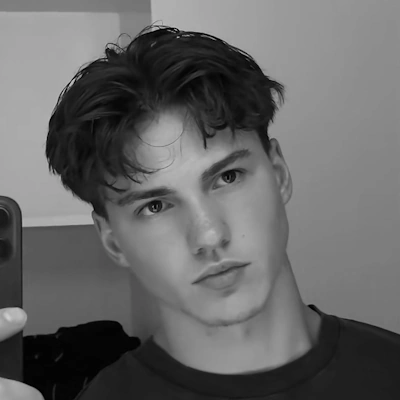
See curtain hair on your own photo, free.
NeonSnap's AI Hair Change tool lets you try curtain hair and dozens of other styles on your own photo before you book a single appointment.
Try Curtain Hair Free