£2.99 for 10 tokens



A satin bow tied round a ponytail is about as small a styling decision as exists. It costs a couple of pounds, takes four seconds, and changes an outfit more than a new coat would. That is roughly the whole idea behind coquette, an aesthetic that gets its effect from small, obviously decorative details rather than from expensive pieces.
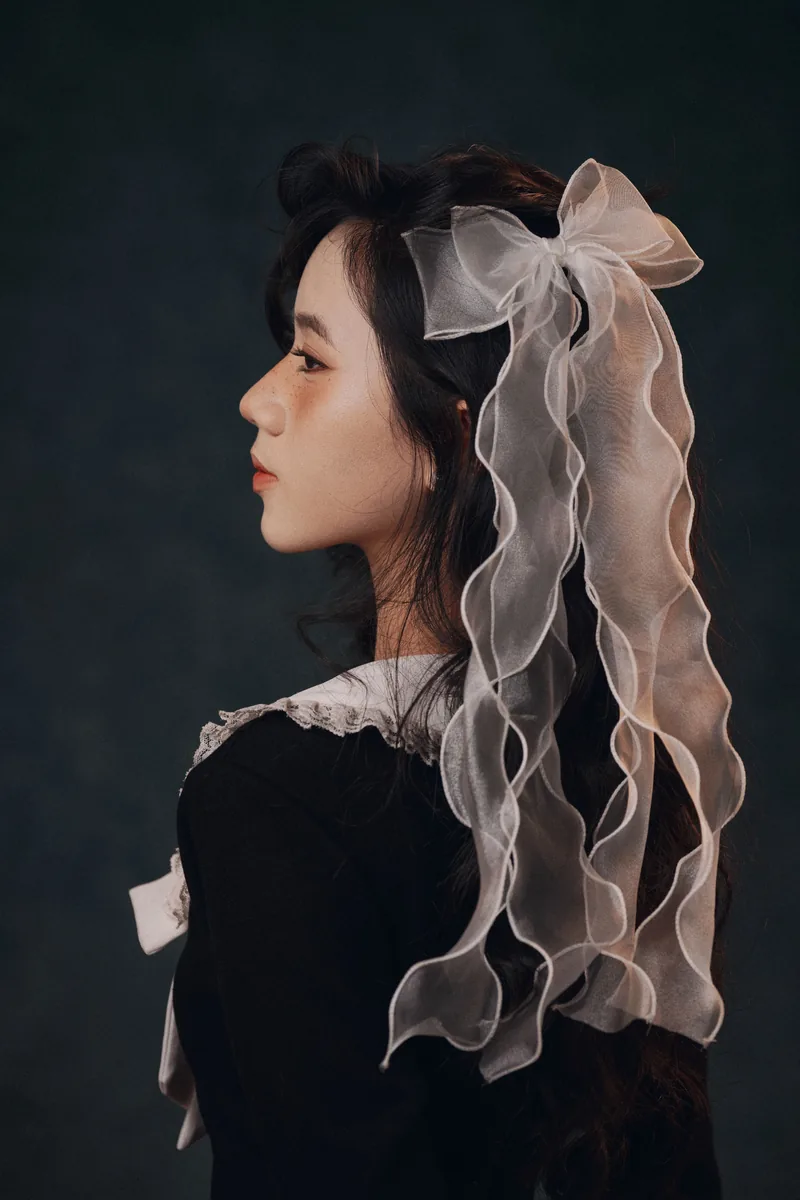
The Coquette Aesthetic
What It Is and How to Get the Look
Coquette is the aesthetic your feed has been full of since about 2023, whether or not anyone named it for you. Bows on hair, on shoes, on bag straps, on jumpers. Lace collars over black knitwear. Ballet flats back in circulation after fifteen years of trainers. Pearl necklaces worn with jeans. It is soft, romantic, and much more calculated than it looks.
This guide covers what the style actually is, the awkward history it carries and what happened to it, how it differs from the aesthetics it gets confused with, the palette, the makeup, the hair, the wardrobe, and the one rule that stops the whole thing tipping into fancy dress.
Coquette treats prettiness as a decision rather than a default. The bow is not there because it suits you. It is there because you put it there.
What Is the Coquette Aesthetic?
Coquette is a romantic, deliberately feminine style built on decorative detail. Satin and organza bows, lace trim, ribbon, pearls, sheer fabrics, corset seaming, ballet flats and Mary Janes, all in a palette that runs from ballet pink through cream to black. The reference points are ballet costume, vintage lingerie, and the fussier end of eighteenth and nineteenth century dress.
The word itself means a flirt, and the aesthetic keeps that idea at its centre. Coquette dressing is aware of being looked at. It is not the quiet good taste of old money or the wellness polish of clean girl, both of which try hard to look like they are not trying. Coquette does the opposite. The effort is the point, and the decoration is meant to be noticed.
What makes it work as a wardrobe rather than a mood board is that the defining elements are cheap and reversible. A hair ribbon, a lace-trimmed camisole under a jumper, a pair of pearl earrings. You can be fully coquette on a Tuesday and back to plain black on Wednesday without having bought anything you now regret.
Where It Came From, and the Part Worth Knowing
The visual language is old. Sofia Coppola's Marie Antoinette in 2006 gave a generation a pastel, ribboned, macaron-coloured version of the eighteenth century that has been quoted ever since. Lana Del Rey's early records did something similar in a different register, pairing Americana with a vintage, film-still femininity that Tumblr immediately turned into a look.
The Tumblr version of coquette in the mid 2010s sat next to a set of tags built around Nabokov's Lolita, and it carried the sexualised-schoolgirl imagery that came with them. That is the uncomfortable part of the history and it is worth stating plainly rather than skipping. Anyone who was on the platform then knows what those tags looked like.
The version that returned on TikTok around 2023 is a different thing. It kept the bows, the lace and the pink and dropped the rest. The reference now is ballet, Simone Rocha's tulle and pearls, Sandy Liang's bows, and a general reclaiming of girlishness by people in their twenties and thirties who spent their teens being told that liking pink was a failure of taste. The current aesthetic is about decoration, not about looking younger. If you have seen the older Tumblr material and found it off-putting, that reaction was reasonable, and it is not what the style means now.
Coquette vs Balletcore vs Soft Girl
These three get used interchangeably and they are genuinely different, though the wardrobes overlap.
Balletcore takes its cues from what dancers wear to rehearse. Wrap cardigans, leg warmers, ribbed knits, leotards, tights, hair in a bun. It is functional clothing worn as fashion, and the mood is disciplined and slightly austere. Coquette takes its cues from what dancers wear to perform. Tulle, satin, ribbon ties, decoration for its own sake. Balletcore is the studio at eight in the morning. Coquette is the stage.
Compared to soft girl, coquette is older in its references and more restrained in its colour. Soft girl draws on contemporary internet femininity and uses bright pastels, heavy blush, hearts and butterfly clips. Coquette draws on ballet and vintage lingerie, keeps the palette muted, and uses black far more freely. Soft girl is a candy shop. Coquette is a jewellery box.
Cottagecore shares the romantic, historical, handmade instinct but points it outdoors. Linen, florals, gardens, baking. Coquette is an indoor aesthetic: satin, mirrors, bedroom lighting, perfume bottles on a dresser.
The Coquette Colour Palette
The palette is small, which is part of why the look is so easy to assemble. Almost everything sits within six or seven colours.
- Ballet pink, the anchor. Pale, slightly greyed, closer to the colour of a satin pointe shoe than to bubblegum
- Cream and off-white, the base for lace, blouses, tights and knitwear
- Black, used more than people expect. Black is what stops the pink reading as childish, and a black cardigan over a lace slip is one of the most reliable coquette outfits there is
- Cherry red, the loudest accent, used in small doses. A red ribbon, a red lip, a red bow on a black bag
- Butter yellow, a softer alternative to cream that has become one of the more current coquette tones
- Powder blue, the secondary pastel, mostly in ribbon, bows and slip dresses
- Dusty lilac, an occasional third pastel that sits comfortably beside the pink without competing
Silver and pearl are the metals, not gold. Gold reads warm and adult and pulls the look toward clean girl. Pearl in particular does an enormous amount of work here, on necklaces, hair pins, bag charms and buttons, and cheap freshwater pearls look far better than cheap gold plate.
Coquette Makeup: Doll-Like, Not Heavy
The makeup is where people most often overshoot. Coquette makeup is soft and slightly artificial, like a face in a portrait rather than a face in a photograph. It is not full glam, and almost none of it involves contouring.
The base: soft and light
A light or medium coverage base with a satin finish. Skin should look smooth and a little diffused rather than sharply defined. Skip heavy contour entirely. If you want dimension, a soft cream bronzer along the hairline is enough. The doll-like quality comes from flatness, so anything that sculpts the face works against the look.
The blush: high, and more than you think
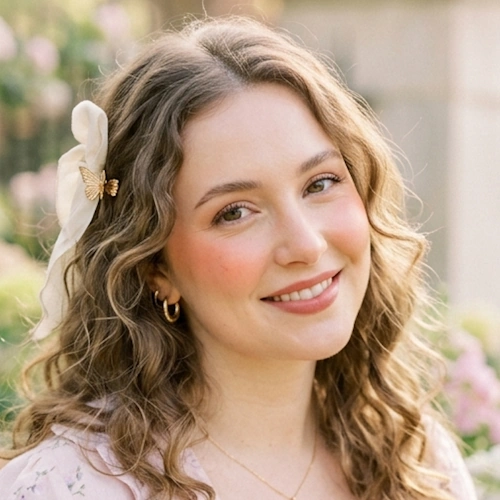
This is the step that makes or breaks it. Blush goes high on the cheekbones and sweeps up toward the temples, and it usually carries lightly across the bridge of the nose. Cream or liquid blush in a cool rose or soft berry, applied with fingers and blended until the edges disappear. The effect should look flushed rather than applied, like you have just come in from the cold.
The eyes: open and soft
Curl the lashes properly and use a lengthening mascara on the top lashes, with a light touch on the bottom. A wash of rosy or peach shadow on the lid rather than a defined crease. A dot of light shimmer in the inner corner. If you want liner, keep it thin and slightly smudged, or use brown rather than black. Sharp graphic liner belongs to a different aesthetic.
The brows: soft and full
Brushed up and filled in only where there are gaps, with a light hand. Coquette brows are not sculpted or laminated flat. A softer, slightly feathery brow suits the romantic quality of the rest of the face far better than a hard, defined shape.
The lip: glossy and stained
A rosy or cherry-toned lip with a glossy finish. The most characteristic version is a stained centre with a softer edge, done by pressing colour into the middle of the lip and blending outward rather than lining the whole shape. Lip oils and tinted balms suit this better than a matte lipstick. Cherry cola, a deep glossy red-brown, is the darker option and works well against a pale pink outfit.
The optional freckles
Faux freckles drawn lightly across the nose and upper cheeks with a fine brow pencil, then pressed down with a sponge so they sit in the skin. They add to the doll-like quality and they are entirely optional. If you already have freckles, skip the base over them and let them show instead.
Try it with NeonSnap
See coquette makeup on your own face
NeonSnap's free AI Makeup Change tool applies different makeup looks to your own photo instantly. Try the high blush, the glossy stained lip, and the soft doll-like base before you buy a single new product.
Try AI Makeup Change free →Coquette Hair: The Bow Does Most of the Work
You can get most of the way there with a ribbon and no cut at all, which is unusual among aesthetics. Hair length barely matters. What matters is that something decorative is visibly tied into it.
The half-up bow
The signature. Take the top third of your hair, secure it at the crown with a small clear elastic, and tie a satin or organza ribbon over the elastic in a proper bow with long tails. The tails are the whole effect, so cut the ribbon longer than feels sensible. A ribbon around 4cm wide and 90cm long gives the right proportions on most hair. Leave a few face-framing pieces loose at the front.
The ribbon ponytail
A low ponytail with a ribbon tied over the elastic and the tails left hanging. Works with straight or waved hair and takes about a minute. This is the version to wear when the rest of the outfit is plain, because it adds the coquette signal without asking anything else of the look.
Soft curled ends
Hair worn down with the bottom third curled loosely away from the face, then brushed out so the curl is soft rather than defined. This gives the slightly romantic, old-photograph quality the aesthetic likes. A middle or deep side part both work. Add a small bow clip at the side if you want the reference to be unmistakable.
The ballet bun with ribbon
A neat centre-parted bun with a ribbon tied around the base. Cleaner and more balletcore than the half-up bow, and the better choice when the outfit is already heavy on lace. It also happens to be the most office-appropriate coquette hairstyle by a wide margin.
lightbulb
Not sure whether a half-up bow or soft curls suits your face shape? NeonSnap's AI Hair Change tool lets you try ribbon styles, curls and buns on your own photo in seconds, so you can pick before you spend twenty minutes with a curling iron.
The Coquette Wardrobe
The wardrobe divides neatly into two groups: cheap decorative items that create the look, and plain items that keep it wearable. You need both. The mistake almost everyone makes at the start is buying only from the first group.
Bows, in quantity
Satin hair bows, bow clips, bow-front tops, bows tied to bag handles and to the ankle strap of a shoe. This is the cheapest and most effective entry point into the aesthetic. A metre of good satin ribbon from a haberdashery costs less than a coffee and gives you several hair bows. Ribbon quality matters more than you would expect: cheap polyester ribbon holds a limp, creased bow, while a heavier double-faced satin ties into a shape that stays.
Lace-trimmed camisoles and slips
A lace-trimmed camisole in cream, black or pale pink is the most versatile coquette piece there is. Worn alone in summer, layered under a cardigan or over a long-sleeved top the rest of the year, or with the lace edge deliberately showing at the hem of a jumper. A bias-cut slip dress in satin does the same job at greater length.
Cardigans, cropped and fine
A fine-knit cardigan, ideally cropped and slightly fitted, worn buttoned or half-buttoned over a camisole. Pearl or heart-shaped buttons push it further into the aesthetic. Cream, black and ballet pink are the useful colours. This is the layer that makes the more revealing pieces underneath wearable in daylight, which is most of what coquette layering is doing.
Ballet flats and Mary Janes
Ballet flats, especially with a ribbon tie at the ankle, are the defining coquette shoe. Mary Janes with a strap and a small heel are the sturdier alternative and are considerably better for actual walking. Black patent versions of either work with almost everything and stop the outfit reading as too sweet. Be realistic about the flats: most are unlined and unforgiving, so try them on properly.
Corset detailing
Not a costume corset. Visible boning seams, a laced back, or a structured bodice on an otherwise simple top or dress. This is where the vintage lingerie reference comes through. One corseted piece per outfit is plenty, and it works best when everything else is plain: a corset top with straight-leg jeans and flats is a far better outfit than a corset with a tulle skirt.
Sheer tights and socks
Sheer black tights under a skirt, or lace-trimmed ankle socks with flats. Socks with flats has been one of the most divisive styling choices of recent years and it is, for this aesthetic, correct. Ribbed white or cream socks with black Mary Janes is the reliable version if the lace-trimmed ones feel like too much.
The plain half of the wardrobe
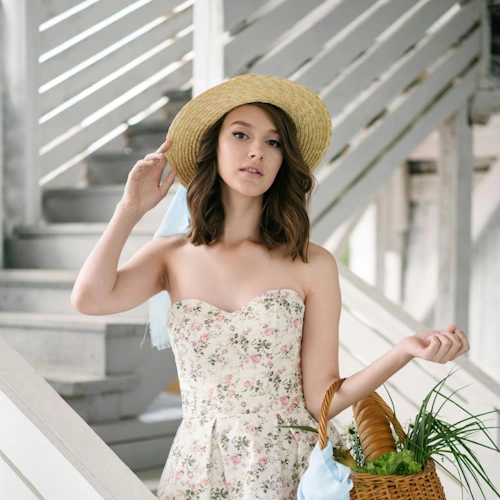
Straight-leg or barrel-leg jeans, a plain black jumper, a well-fitting white shirt, a black midi skirt, a good coat. None of these are coquette on their own and all of them are what makes coquette wearable. The bow, the lace and the pearls do their job best when three quarters of the outfit is doing nothing at all.
Try it with NeonSnap
Try coquette outfits on your own photo
NeonSnap's free AI Outfit Change tool puts lace, satin, corset tops and cardigans on your own photo so you can see how the silhouettes work on you. Useful before committing to a slip dress you cannot return.
Try AI Outfit Change free →Coquette Accessories
Accessories carry more of this aesthetic than most, because they are how you signal it without changing your clothes.
- Pearls, the defining jewellery. A single strand worn with a jumper and jeans, layered short and long strands, or pearl studs and drops. Freshwater pearls are inexpensive and look genuinely good, which is not true of most cheap jewellery.
- Ribbon chokers, a length of black velvet or pink satin tied at the throat. The most direct nineteenth century reference in the whole wardrobe and the single quickest way to make a plain outfit read coquette.
- Bow clips and barrettes, small satin bows worn in pairs at the sides, or one large bow at the back. Buy a few in cream, black and pink and you have covered most outfits.
- Heart and locket pendants, small silver hearts, lockets, and charm bracelets. Keep them delicate. Anything chunky pulls in a different direction entirely.
- Lace-trimmed gloves and hair scarves, occasional pieces for when you want to lean in. A silk scarf tied over the head or knotted round a bag handle is the more everyday version.
The One Rule: Pick One Thing
Here is the honest problem with coquette. Every individual element is charming and they are all cheap, so it is very easy to wear five of them at once and end up looking like you are going to a themed party.
The rule that fixes it: one romantic element per outfit, everything else plain. A ribbon in the hair with a black jumper and jeans. A lace camisole under a plain cardigan with trousers. Pearls with a white shirt. Ballet flats with a simple midi skirt. Any one of those reads unmistakably as coquette and none of them looks like a costume.
Two is fine if one of them is small. Three is where it starts to go wrong, and if the outfit contains a bow, lace, pearls, tights, ballet flats and a pink skirt simultaneously, it has stopped being an aesthetic and become fancy dress. Black and denim are the fastest correction. If an outfit feels too sweet, swapping one pink piece for black usually solves it.
The same principle applies to age. Coquette works perfectly well at thirty five or fifty, and the way it works is by leaning on the vintage and ballet references rather than the girlish ones. Pearls, a black velvet ribbon, a lace-trimmed camisole under tailoring, a good satin bow in a low bun. Skip the pastel micro-skirts and the whole thing reads as romantic rather than youthful.
Getting the Look on a Small Budget
This is one of the cheapest aesthetics to try, which is a large part of why it spread so fast.
- Start with ribbon. A haberdashery or a market stall will sell you a few metres of double-faced satin ribbon for around £3. That is a week of different hair bows before you have bought a single item of clothing.
- Buy the camisole before the dress. A lace-trimmed camisole at £12 will appear in more outfits than a £70 slip dress, because it layers under things you already own.
- Charity shops are unusually good for this one. Lace slips, pearl necklaces, fine cardigans with decorative buttons and silk scarves all turn up constantly and are rarely priced highly, because they are exactly the sort of thing that gets donated.
- Spend the money on the shoes. Ballet flats are the one piece where cheap versions fail badly. Thin unlined soles wear through in a season and the shape collapses. A better pair at £60 to £80 outlasts three pairs at £20.
- Skip the gold. Silver and pearl are the correct metals here, and both are cheaper than decent gold plating. Cheap gold plate tarnishes and reads as the wrong aesthetic anyway.
If you are still working out whether this is your direction at all, our guide on how to find your aesthetic covers the process of narrowing it down properly rather than buying into the first thing your feed shows you.
Frequently Asked Questions
What is the coquette aesthetic?
Coquette is a style built on romantic, deliberately feminine details, satin bows, lace trim, ribbon, pearls, ballet flats, and soft pinks and creams offset with black. It borrows from ballet costume, vintage lingerie and historical dress, and it treats prettiness as a choice rather than a default.
What is coquette makeup?
Doll-like rather than heavy. A soft, light base with no contour, blush applied high on the cheeks and lightly across the nose, curled lashes, soft brows, and a glossy rosy or cherry lip stained from the centre outward. Faux freckles are a common optional finish. You can preview the whole look with NeonSnap's AI Makeup Change tool.
What is the difference between coquette and balletcore?
Balletcore is drawn from what dancers wear to rehearse: wrap cardigans, leg warmers, leotards, buns. Coquette is drawn from what they wear to perform: tulle, satin, ribbon and decoration. They share ballet pink and ribbon, but balletcore is practical and coquette is ornamental.
What colours work for the coquette aesthetic?
Ballet pink, cream, white and butter yellow, with black as the grounding contrast and cherry red as the accent. Powder blue and dusty lilac appear as secondary tones. Silver and pearl are the metals rather than gold.
How do I wear coquette without looking like I am in costume?
One romantic element per outfit, everything else plain. A hair ribbon with a black jumper and jeans reads as coquette. Bow, lace, pearls, tights and ballet flats all together reads as fancy dress. Adding black or denim is the fastest fix when an outfit feels too sweet.
Can I try coquette looks before buying anything?
Yes. Try ribbon and bow hairstyles with the Hair Change tool, the soft doll-like makeup with the Makeup Change tool, and lace and satin outfits with the Outfit Change tool, all free and all on your own photo.
Try the coquette aesthetic on your own photo, free.
NeonSnap's free AI tools let you preview the bows, the soft makeup and the lace before you spend anything on it.
Try AI Hair Change free