 Make yours now
 Enough for 10 ten second videos






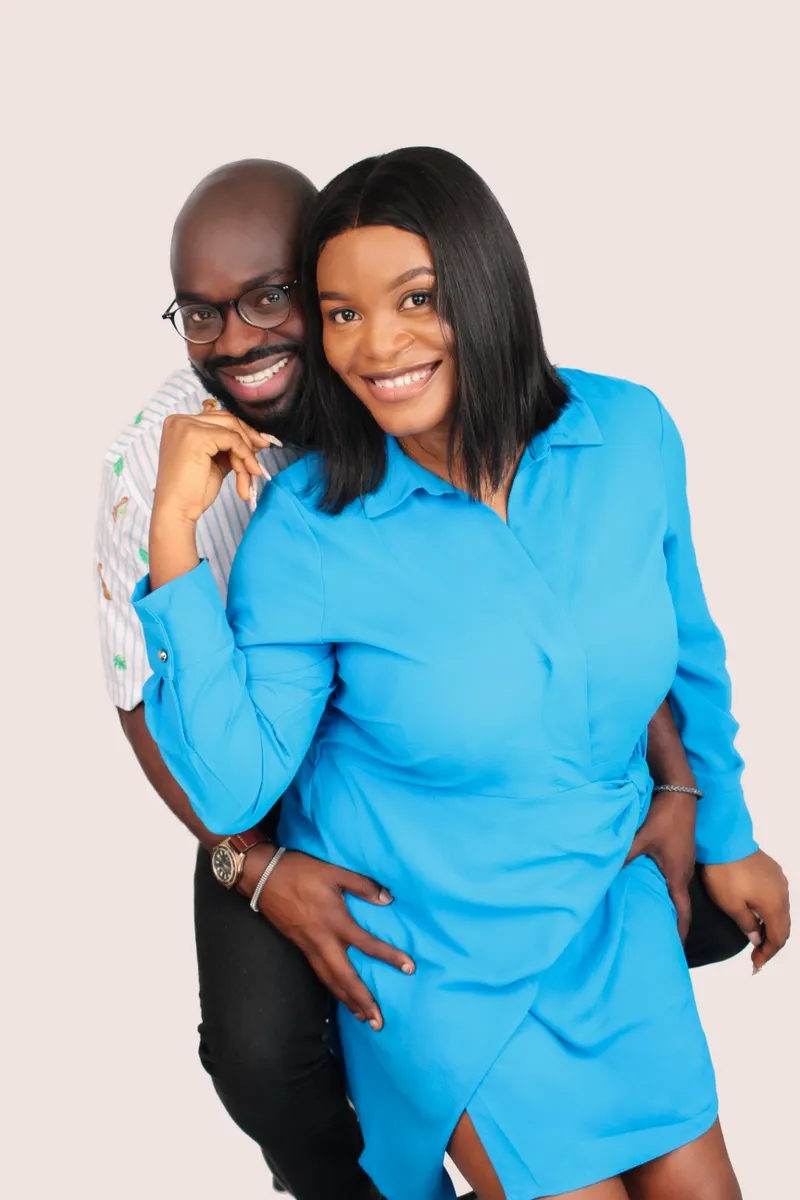
Two photos go in, and about a minute later a child comes out with your partner's eyebrows and your chin, aged anywhere from newborn to eighteen. It is a good trick and worth doing at least once. It is also not a prediction, whatever the app store listing says, because an image model can only work with what it can see, and most of what decides a child's face is not visible on either parent. Here is what a baby face predictor actually does with your photos, the handful of things it can get roughly right, the genetics it has no way of knowing about, and how to upload photos that give it a fair chance.
How Accurate Are AI Baby Generators?
What a Baby Face Predictor Reads From Two Photos, What Genetics Keeps Hidden and How to Get a Better Picture
How Does an AI Baby Generator Work?
The older baby apps were morphing software. They found the eyes, nose and mouth in each photo, averaged the positions and blended the pixels, which is why so many of their babies looked like a slightly melted adult. The current ones, NeonSnap's included, hand both photos to an image model and describe the child they want back. NeonSnap's future baby tool sends your one or two photos to Google's Gemini 3 Pro Image model with an instruction to draw a child who combines the facial features of the people in them, as a boy or a girl, at the age you picked. The model has seen an enormous number of faces and an enormous number of families, so it has a sense of how a child tends to echo two adults, and it draws one that does.
What it does not do is read DNA. There is no genetics in the pipeline on any of these tools, because there is no genetics in a JPEG. The model is making an educated visual guess about family resemblance. The guess is often charming and occasionally uncanny, and it is still a guess.
There is no genetics in the pipeline, because there is no genetics in a JPEG.
What Can a Baby Face Predictor Get Right?
The things that show on the surface of both parents. If you both have dark eyes, the child almost certainly will, and the model draws dark eyes. If you share a skin tone, a hair texture, a strong jaw or a particular set to the eyes, the model carries it over, which is what real children tend to do with traits both parents have. Where the two of you differ it picks a middle path or borrows one feature from each, and real children do that too, often enough that a predicted ten-year-old can look like a cousin you have actually met.
So the broad strokes are plausible: colouring within the family range, a face shape that could belong to either of you, hair that sits somewhere between yours. The detail is invention. Which nose, whose ears, whether the eyebrows come out straight or arched, the model is choosing rather than predicting, and it would choose differently if you ran it again with a different photo of the same two people.
What Does Genetics Do That a Photo Can't Show?
Three things, mainly. It carries traits that neither parent displays, it mixes thousands of variants into a single feature, and it keeps changing the result for twenty years after the photo was taken.
Recessive traits are the obvious one. Two brown-eyed parents can have a blue-eyed child, as any family with a blue-eyed grandparent can tell you, and the model has no way to know the grandparent exists. Red hair works the same way. It comes mostly from variants of a gene called MC1R, and when two parents each carry one copy without being red-headed themselves, each child has roughly a one in four chance of red hair. Nothing in either parent's photo hints at it. The reverse turned out to be true as well: the old school rule that two blue-eyed parents cannot have a brown-eyed child is wrong, as MedlinePlus now says. It is uncommon, but eye colour is set by several genes, with two on chromosome 15 called OCA2 and HERC2 doing most of the work, and they behave more like dimmer switches on melanin than an on-off switch.
Then there is the sheer number of moving parts. A 2021 study in Nature Genetics that measured the faces of 8,246 people of European ancestry found 203 separate places in the genome linked to ordinary variation in face shape, and that was with the group deliberately kept narrow. Height is worse. A 2022 study of 5.4 million people found 12,111 variants tied to it, and even with roughly eighty percent of height down to genes, the best a paediatrician can do from two parents' heights is a target with a range of about 8.5 cm either side. Nobody can look at two faces and add that up, and a generator doesn't try.
And the classroom traits that were supposed to be simple mostly aren't. Dimples are taught as a single dominant gene. John McDonald at the University of Delaware went looking for the evidence and found no published genetic study of cheek dimples at all, and points out that plenty of dimpled children lose them by adulthood. Widow's peaks, cleft chins and attached earlobes sit on the same list of things that are messier than the diagram.
Do Babies Really Look More Like Their Father?
A 1995 study in Nature said so. Christenfeld and Hill showed people photos of one-year-olds, asked them to pick out the parent, and found the fathers were matched more often, which fitted a neat evolutionary story about reassuring the father of his paternity. It got a lot of press and it still gets repeated at baby showers. Brédart and French tried to replicate it in 1999 with children aged one, three and five and found no father bias at all, and the studies since have mostly come out the same way. So no, and a generator that leans towards one parent is reflecting the photos it was given rather than biology. If the result looks more like one of you, the likeliest explanation is that one photo was sharper, better lit or more front-on than the other.
Why Does the Newborn Option Look Least Like Either of You?
Because newborns look like newborns. A baby a few days old has a face shaped partly by the birth itself: puffy eyelids, a nose that may have been flattened on the way out, cheeks that have not settled, and in many lighter-skinned babies a blue-grey eye colour that will not reach its real shade until somewhere between six months and a year, as the melanin comes in. Resemblance to a parent is faint at that age in real life, and the model, which learned from real photos, draws it faintly too.
Run the same two photos at five, ten and eighteen and the family turns up. Eighteen is usually the most convincing result, because by then the model is drawing an adult face and adult faces are what it has most to go on. It is also the one that makes people go quiet for a second.
Which Photos Should You Upload?
The model copies what it is given, so the photos decide most of the result.
- One face per photo, looking straight at the camera. A three-quarter angle leaves the model guessing about half the face, and it will guess.
- Even light, from a window if you can. Harsh overhead light puts shadows under the eyes and the model may read them as a feature.
- Nothing covering the face. Sunglasses and a hat pulled low hide what the model needs. Filters are worse: a smoothing filter becomes the child's skin, and a lens that slims your jaw gives your child the slimmed jaw.
- Phone photos are fine. The upload is resized before it reaches the model, so a huge file gains nothing, but a tiny thumbnail saved from a group chat loses a lot.
- Recent beats flattering. A photo from ten years ago makes a child of the person you were.
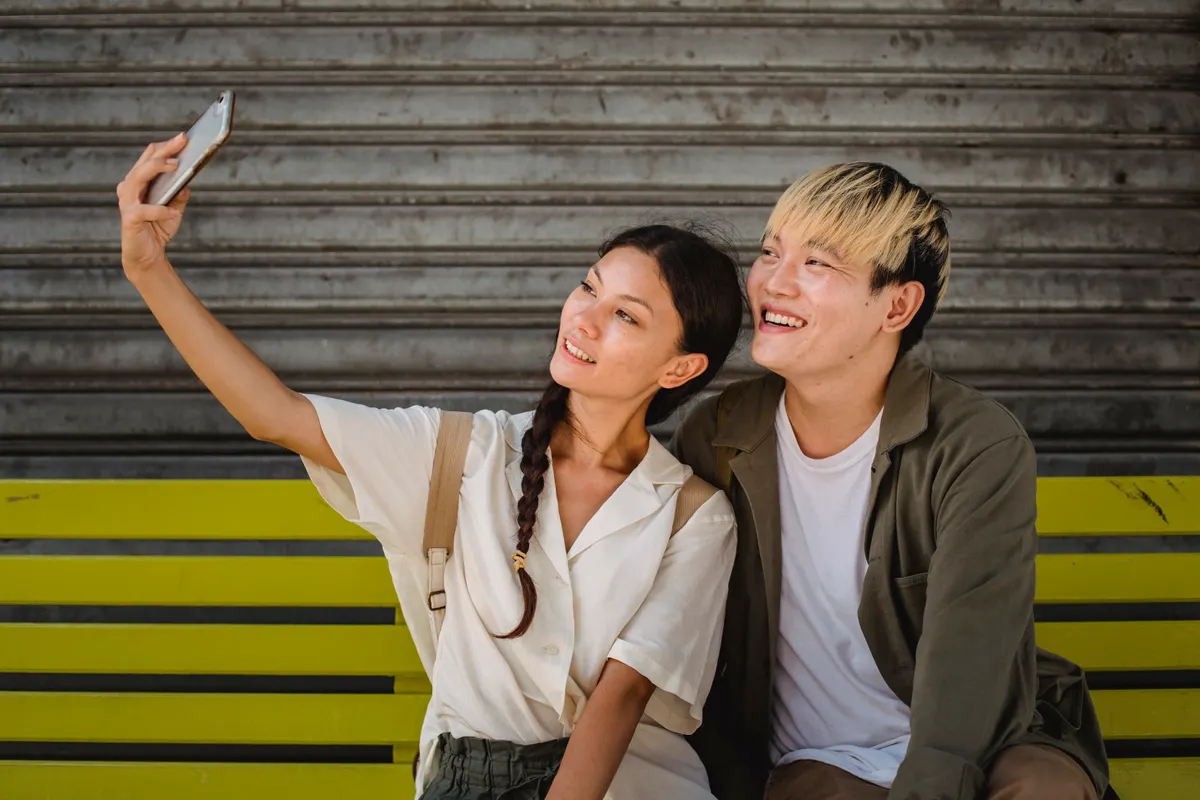
The guide to taking a good selfie covers the same ground from the other direction: hold the phone a little further away than feels natural, keep it at eye level and face the light. A photo that follows those rules is a photo the model can read.
Try it with NeonSnap
See your future baby in about a minute
Upload one or two parent photos, choose boy, girl or Surprise, pick an age from newborn to eighteen and let Gemini 3 Pro Image draw the child. No account needed, and you can download or share the result straight from the page.
Try the future baby generator free →Is It Safe to Upload Your Photos?
Ask before you do. The baby apps on the App Store are mostly subscriptions, typically $3.99 to $6.99 a week or $29.99 to $49.99 a year, and the price is the smaller problem: a weekly subscription for a tool you will use twice is a business model that relies on people forgetting to cancel. The bigger question is what happens to the faces. A photo of you and your partner is personal data, and some privacy policies allow uploads to be kept and used to train the next version of the app, so read the policy before the photos leave your phone.
NeonSnap's future baby generator is free to try, needs no account, and uses your photos to make the picture and then does not keep them. The finished picture is yours to download or share, and nothing you uploaded is sitting in a training set somewhere.
What Should You Do With the Result?
Treat it as a party trick with a decent eye. Run it with both parents, then with each of you on your own, which asks the model to invent the other half and tells you how much of the first picture was really coming from your partner. Try Surprise for the sex, and try every age, because the newborn and the eighteen-year-old from the same two photos can look like different families. Save the one that makes you both laugh, and hold off on painting the nursery to match the hair colour, since a one in four chance of red hair is not visible in anyone's selfie.
lightbulb
If the result looks like one parent only, swap in a different photo of the other parent before blaming genetics. A sharper, more front-on photo wins the model's attention every time.
Frequently Asked Questions
How accurate are AI baby generators?
They are a visual blend, not a forecast. An image model looks at the two faces it is given and draws a child who echoes both, using what it has learned about how families tend to look. It gets the surface right, such as colouring both parents share and a plausible face shape, and it invents the rest. It cannot see recessive genes, grandparents or the thousands of variants that shape a face, so treat the picture as entertainment with a decent eye for resemblance.
Can an AI baby generator predict eye colour?
Only when the answer is obvious. If both parents have dark eyes it will draw dark eyes, which is also the likely outcome in real life. It cannot know that one of you carries a blue-eyed grandparent's genes, and it has no way to predict the uncommon cases, such as two blue-eyed parents having a brown-eyed child, which happens because eye colour is set by several genes rather than one.
Do babies look more like their father?
The evidence says no. A 1995 study in Nature reported that one-year-olds were matched to their fathers more often than their mothers, but a 1999 attempt to replicate it with children aged one, three and five found no father bias, and later studies have mostly agreed. If a generated baby looks more like one parent, the usual reason is that one photo was sharper or more front-on than the other.
Why does my AI baby look nothing like me?
Usually the photo. A three-quarter angle, heavy shadows, sunglasses, a filter or a small blurry file all leave the model guessing, and it fills the gaps with a generic face. Try again with a recent, front-on photo in even light. The newborn setting also shows the least resemblance, because real newborns look like newborns. The five, ten and eighteen year old settings show the family far more clearly.
What photos work best for a baby face predictor?
One clear face per photo, looking straight at the camera, lit from the front by a window or soft daylight, with nothing covering the face and no filter. Ordinary phone photos are fine. A recent photo gives a more honest result than an old favourite, because the model draws the child of the person it can see.
Is the NeonSnap future baby generator free?
Yes, it is free to try and does not need an account. Upload one or two parent photos, choose boy, girl or Surprise and an age from newborn to eighteen, and the picture is ready in about a minute to download or share. Your photos are used to make the picture and are not kept.
See what your baby might look like, free.
Upload one or two parent photos, pick an age from newborn to eighteen and get a picture in about a minute. No account, and your photos are not kept.
Try the future baby generator free