£2.99 for 10 tokens



In 2022 the charity WRAP surveyed more than 6,000 UK adults about their clothes. The average wardrobe held 118 items, and 31 of them, roughly a quarter, had not been worn for at least a year. Skirts and dresses were the worst offenders. A capsule wardrobe is the attempt to get that unworn quarter down to almost nothing, and it is less austere than its reputation.

How to Build a Capsule Wardrobe
The Essentials, the Numbers and What to Skip
The short version: pick a small number of clothes in a few colours that all go together, wear them hard, and only buy something new when it fills a gap you have actually noticed. Most people already own the bulk of a decent capsule. It is buried under the things they bought for one wedding and never wore again.
Below is where the idea came from, how many pieces you need (less settled than the internet claims), what goes in it, how to build one from the clothes you already have, how to choose colours, and whether it saves money or just feels virtuous.
What Is a Capsule Wardrobe?
A small collection of clothes chosen so that almost any top works with almost any bottom, and the shoes and coat go with all of it. The point is the combinations. Twenty pieces that all match produce more outfits than sixty that each go with one other thing.
The phrase is older than most people assume. American magazines were using it in the 1940s for a small set of matching garments. It was Susie Faux, who ran a boutique called Wardrobe in London's West End, who revived it in the 1970s for the idea most people mean now: a core of essentials that do not date, topped up each season with a few newer pieces. Her own list was short: two pairs of trousers, a dress or a skirt, a jacket, a coat, a knit, two pairs of shoes and two bags.
Donna Karan made it famous in 1985. Her first collection under her own name, Seven Easy Pieces, was built around a black bodysuit that everything else layered over: a wrap skirt, trousers, a tailored jacket, cashmere, a leather jacket, something for the evening. At the first show eight models walked out in nothing but bodysuits and black tights, then added pieces one at a time. It was aimed squarely at working women who were tired of the shoulder-padded power suit, and the logic was the same one people use now: fewer things, and all of them working together.
How Many Pieces Should a Capsule Wardrobe Have?
Nobody agrees, and the number matters less than the rule behind it.
The best known figure comes from Project 333, which the American writer Courtney Carver started in 2010. You wear 33 items for three months and box up everything else. The 33 includes clothes, shoes, accessories, jewellery and outerwear. It leaves out underwear, sleepwear, loungewear you only wear at home, workout clothes you only wear to work out, and a wedding ring or any sentimental piece you never take off. Carver has said herself that the number is a boundary rather than a law, and plenty of people pick a different number.
La Redoute's spring 2026 guide suggests 15 to 25 pieces. Woman & Home's says anything from 10 to 80 can count, which is honest but not much use.
Our suggestion for a first attempt is around 30 pieces including shoes, for one season, not counting gym kit or what you sleep in. That is small enough that you will notice gaps and large enough that you will not be washing the same two jumpers every other night. If you get to the end of the season and some of the 30 never came out, the right number for you is lower.
Twenty pieces that all match produce more outfits than sixty that each go with one other thing.
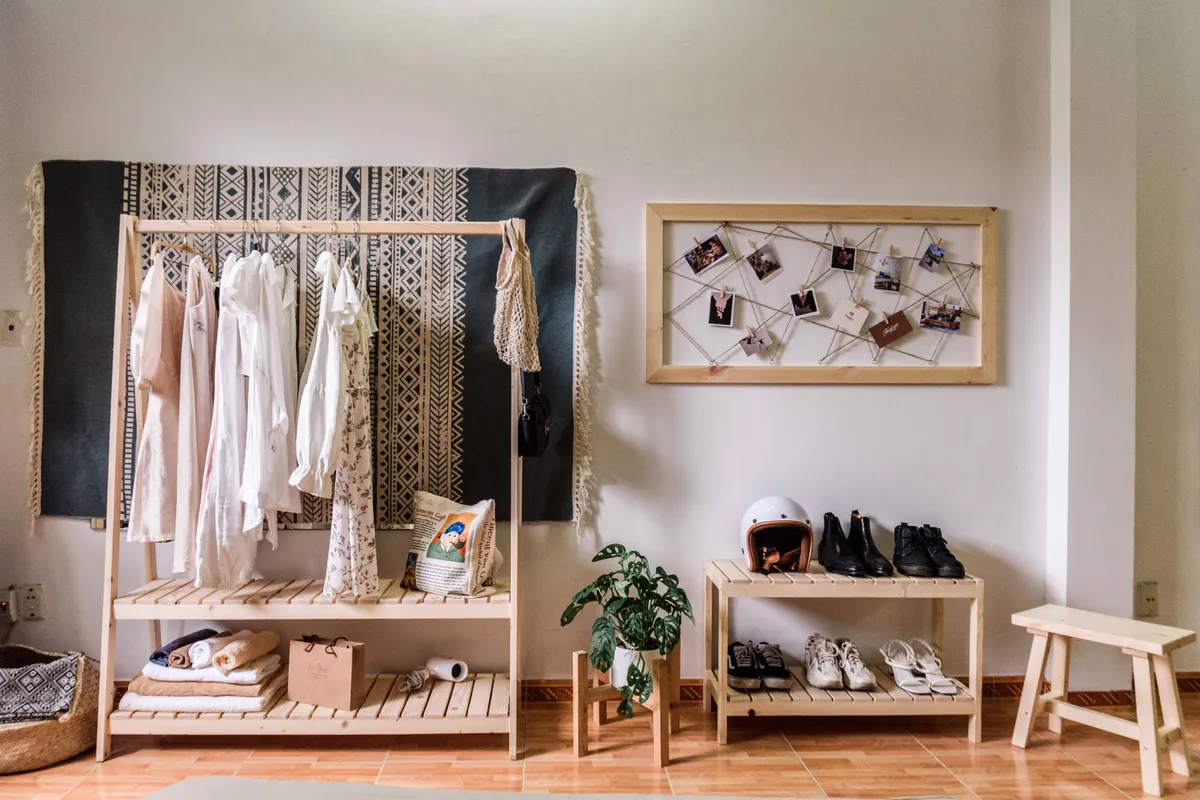
What Goes in a Capsule Wardrobe?
The list below assumes an ordinary week of work, weekends and the odd evening out. Swap pieces to match your life: if you never wear skirts, do not buy one because a checklist told you to.
A coat you actually like
For half the year this is what people see you in. A trench, a wool overcoat or a good mac in a neutral colour. WRAP found non-padded coats and jackets are kept for more than six years on average, longer than anything else, so this is where spending a bit more makes sense.
A jacket or blazer
Navy, black, camel or grey. It turns jeans and a T-shirt into something you can wear to a meeting, which is the kind of versatility a capsule depends on. Try it on over a jumper, since that is how you will wear it from October to April.
Two or three knits
A fine crew neck, a polo neck and something chunkier. Merino and cotton blends wash better than cheap cashmere, which pills quickly and looks tired by its second winter.
Plain tops and shirts
Four or five T-shirts or vests in your neutrals, plus a white or pale blue shirt. These get the most wear and the most washing, so buy fabric heavy enough that it does not go see-through after ten cycles.
Jeans and trousers
One pair of jeans in a dark or mid wash, and one or two pairs of trousers in a cut that suits you, whether that is straight, wide or tapered. Jeans are among the clothes people in the UK wear most, and WRAP's figures show they are now kept for four years on average, up from three in 2013.
A skirt or a dress, if you wear them
Skirts and dresses were the clothes most likely to sit unworn in WRAP's survey, at 44 and 43 per cent. So be strict. One you would wear on an ordinary Tuesday beats three that only come out for occasions.
Two or three pairs of shoes
A pair of trainers or flats for every day, a boot for winter, and something smarter. Shoes decide whether an outfit reads as casual or dressed up more than any other piece does, so a capsule with the right three pairs covers a lot of ground.
One bag and a few accessories
A bag big enough for daily use in a colour that goes with all your shoes, plus a belt, a scarf and whatever jewellery you wear every day. Accessories are where a capsule gets its personality, which we come back to below.
Try it with NeonSnap
See the coat or blazer on you before you buy it
The pieces that hold a capsule together are also the expensive ones, and a camel coat that looks perfect on a model can wash you out completely. NeonSnap's free AI Outfit Change tool puts a coat, a blazer or a whole outfit onto your own photo, so you can see the colour and cut against your face before you commit to wearing it for five winters.
Try AI Outfit Change free →How to Build One From Clothes You Already Own
The worst way to start a capsule wardrobe is to buy one. A shopping list from a magazine will give you a rail of perfectly sensible clothes that are someone else's, and you will be back to 118 items within a year. Start with your own wardrobe instead.
- Take everything out. All of it, onto the bed. Seeing the whole pile at once is uncomfortable, and that is useful.
- Apply the one year test. WRAP used a year without wear as its measure of an unworn item, and it works for you too. If you have not worn something in the last twelve months, it does not go back in. Store it in a box for now if letting go feels like too much.
- Check what is left still fits and is in good repair. Poor fit was one of the main reasons WRAP's respondents gave for not wearing things. A missing button can be fixed this week. Trousers that are two sizes off cannot.
- Look for the colours that keep turning up. Most people's favourite clothes already share two or three colours. Those are your neutrals.
- Wear only what is left for a month. Write down what you reach for and what you wished you had. The gaps you notice in real life are the only ones worth buying for.
- Buy last, and buy slowly. One piece at a time, secondhand where you can. WRAP found vintage and preloved clothes are kept for 5.4 years on average against four years for new ones bought off the peg.
What do you do with what you take out? Sell the good things, give the rest to a charity shop or a textile bank, and keep a small box of anything you are unsure about. If you have not opened the box by the end of the season, you have your answer.
How Do You Choose a Colour Palette for a Capsule Wardrobe?
This is where a capsule either works or turns into a rail of things that do not go together. The usual structure is two or three neutrals for the big pieces, then one or two accent colours for tops, knits and accessories.
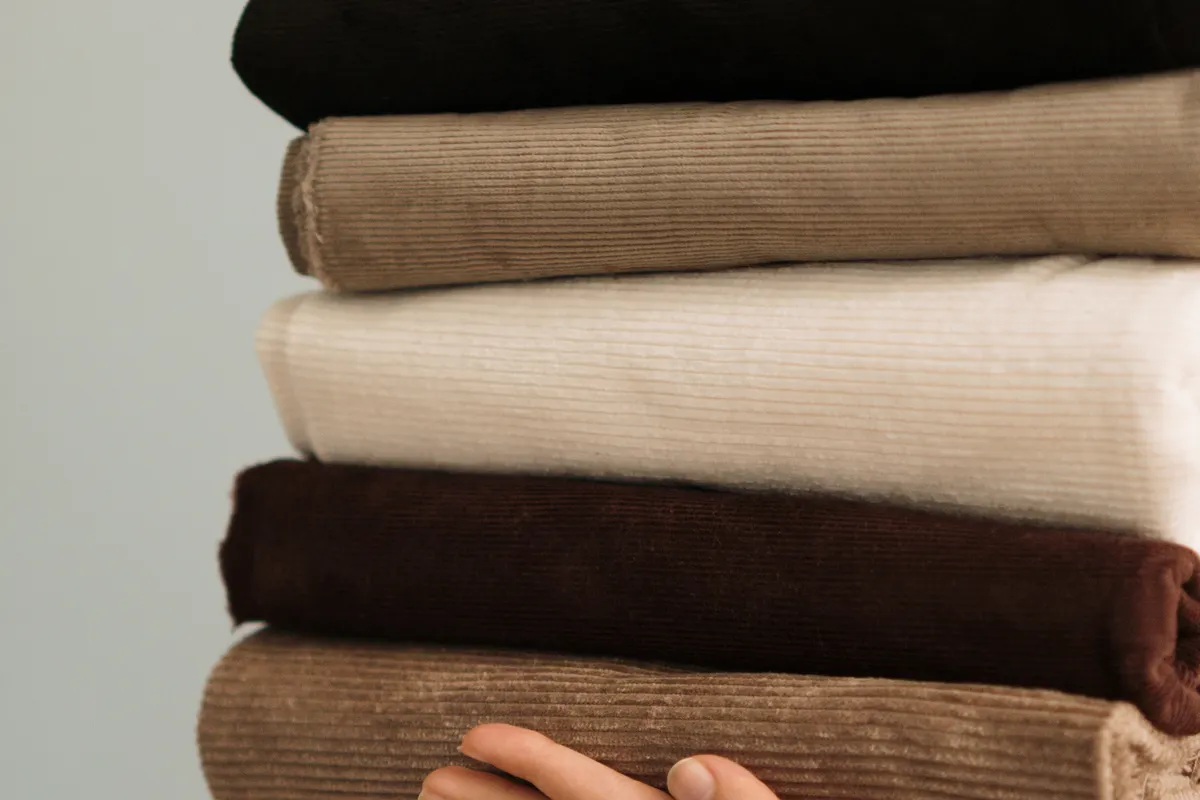
Neutrals do not have to mean beige. Navy, black, grey, camel, olive, cream, chocolate brown and denim all count. What matters is that your neutrals work with each other, so any of your trousers can go with any of your coats. Black and navy together is a matter of taste. Camel, cream and brown together almost always works.
Your accents are the colours that look good near your face. If you already know whether your skin has warm or cool undertones (our guide to what hair colour suits you has a two minute test), lean that way: rust, mustard and olive for warm skin, berry, cobalt and icy pink for cool. If you have no idea, Aria, NeonSnap's AI style advisor, will look at a photo of you and suggest which colours suit you, including a capsule palette of six or seven shades that work together.
One test before you buy anything in a new colour: hold it up next to three things you already own. If it only goes with one of them, it is not capsule material, however much you like it.
Does a Capsule Wardrobe Work for Men?
Often better than it does for women, because most men's wardrobes already run on a narrow set of shapes and colours. The list is the same in principle. One good coat, a navy or grey blazer, a few knits, plain T-shirts and an Oxford shirt or two, dark jeans, chinos or wool trousers, and three pairs of shoes: trainers, a boot and a smart leather pair. Add a suit only if your job or your social life actually calls for one.
Where men usually go wrong is fit rather than choice. A cheap blazer taken in at the waist will look better than an expensive one that is a size too big. Our male grooming guide covers the haircut and skin side of looking put together, which matters as much as what you wear.
Is a Capsule Wardrobe Actually Cheaper?
In the first month, probably not. You may well spend more on each piece than you did before. Over a year it usually comes out ahead, because you stop buying the things that end up in the unworn quarter. WRAP found 45 per cent of UK adults buy clothes at least once a month and the average spend is £76.53 a month, which adds up quickly when a quarter of what is already in the wardrobe goes unworn.
The sum people use is cost per wear: price divided by the number of times you wear it. A £150 coat worn three days a week through five winters works out at well under £1 a wear. A £40 dress worn twice costs £20 a wear, and that is before it goes in the charity bag.
The environmental argument is firmer. WRAP's research found that keeping clothes in active use for nine months longer cuts their carbon, water and waste footprints by up to 20 per cent. Vivienne Westwood put it more briskly at London Fashion Week in 2013: "Buy less, choose well, make it last."
How Do You Stop a Capsule Wardrobe Getting Boring?
This is the most common reason people give up, and it is usually fixable without buying anything big.
Accessories do most of the work. Karan's 1985 collection changed its look with belts and bold jewellery from Robert Lee Morris rather than new clothes, and the same trick works with a silk scarf, a belt or a bag in a colour outside your palette. A capsule built on neutrals can carry one loud thing at a time with no trouble.
Rotate seasonally, as Faux intended. Keep the core all year and swap a handful of pieces in and out each spring and autumn, so lighter shirts come out and heavy knits go into storage. Things you have not seen for six months feel newer than they are.
And let yourself have one trend piece a season. The point of a capsule is to cut impulse buying, and one planned purchase a season is not that. If you want a leopard coat this winter, a capsule of black, camel and cream is the ideal thing to wear it over. Our guide to the old money aesthetic is essentially a capsule wardrobe with a very strong opinion about knitwear, and the clean girl aesthetic runs on the same neutral basics. If you are still working out which direction you want to go, start with how to find your aesthetic before you spend anything.
Frequently Asked Questions
What is a capsule wardrobe?
A capsule wardrobe is a small set of clothes chosen so that almost everything goes with everything else. Susie Faux, who ran a London boutique called Wardrobe, revived the idea in the 1970s, and Donna Karan took it mainstream with her Seven Easy Pieces collection in 1985. In practice it means owning fewer clothes in fewer colours and wearing most of them every week.
How many items should be in a capsule wardrobe?
There is no official number. Courtney Carver's Project 333, which began in 2010, uses 33 items for three months, counting shoes, accessories, jewellery and outerwear but not underwear, sleepwear, loungewear or gym kit. Susie Faux's original list was shorter still: two pairs of trousers, a dress or skirt, a jacket, a coat, a knit, two pairs of shoes and two bags. Around 30 pieces including shoes is a sensible first attempt for most people.
What are the essentials for a capsule wardrobe?
A coat you like wearing, a jacket or blazer, two or three knits, a handful of plain tops and shirts, one pair of jeans, one or two pairs of trousers, a skirt or dress if you wear them, and two or three pairs of shoes. Choose them in a small set of colours that all work together, and add an accent colour once the base is done.
How do I start a capsule wardrobe without buying anything?
Start with what you own. Take everything out, put back only what you have worn in the last year and still fits, then wear only that for a month and note what you reach for. WRAP found the average UK adult has 31 items they have not worn for a year, so most people already own more of a capsule than they think. Buy only to fill the gaps that month shows you.
Does a capsule wardrobe save money?
Usually, though not in the first month. You tend to spend more on each piece and less overall, and the cost per wear drops because every item gets worn more often. The environmental case is clearer: WRAP's research found that keeping clothes in use for nine months longer cuts their carbon, water and waste footprints by up to 20 per cent.
Can I see capsule wardrobe outfits on myself before buying?
Yes. NeonSnap's free AI Outfit Change tool puts a blazer, a coat or a whole outfit onto your own photo, so you can check a colour or a cut against your face and frame before you spend money on a piece that is supposed to last for years.
Try your capsule pieces on your own photo, free.
See the coat, the blazer and the colours on you before you spend a penny on any of them.
Try AI Outfit Change free