£2.99 for 10 tokens



Almost everybody has a foundation in a drawer that looked right at the counter and orange in the car park. That one purchase tends to be where the question starts. The honest answer is that "what suits me" is three questions wearing a trench coat: which colours sit well against your skin, where those colours belong on your particular face, and how much makeup you actually want to be wearing at half past eight on a Tuesday. Sort them in that order and the shopping gets much cheaper.
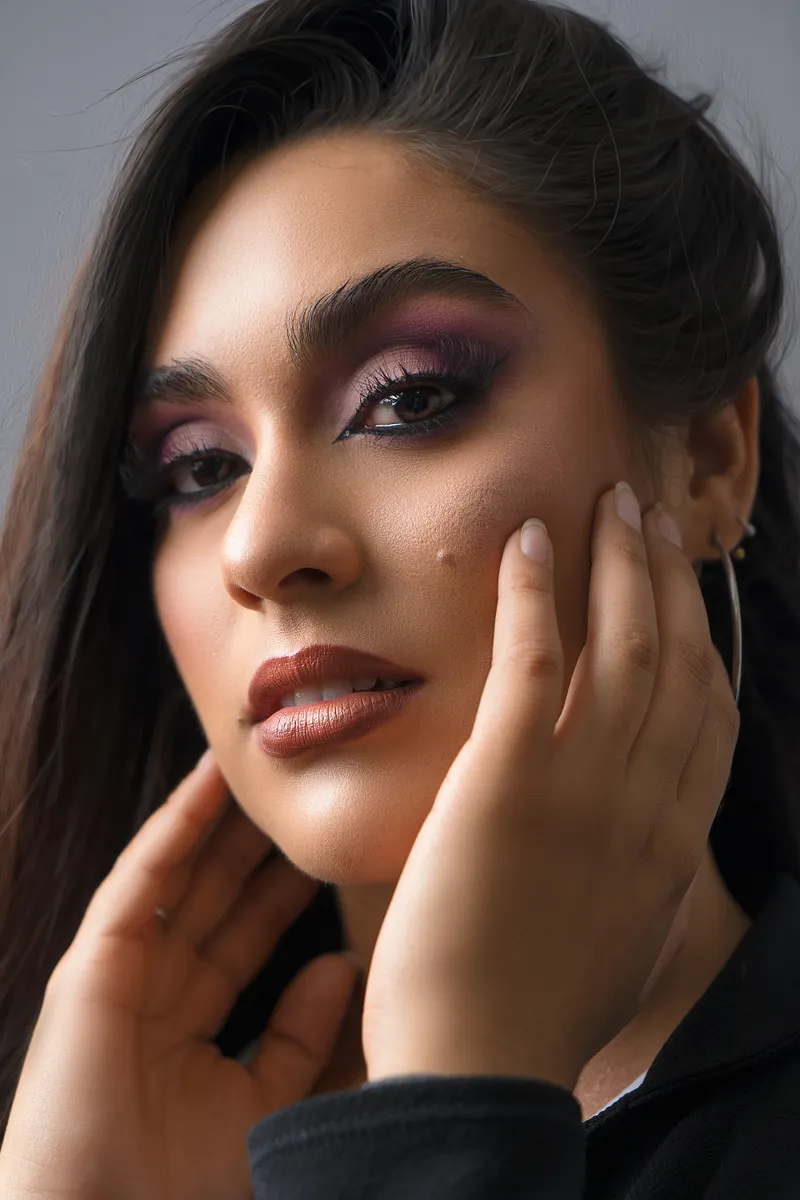
What Makeup Suits Me?
Undertone, Contrast, and Where the Blush Goes
What follows is the practical version. How to find your undertone with a sheet of A4, how to match a base so it disappears at the jaw, which eyeshadows do something for your eye colour and which just sit there, where blush goes on a round face compared with a long one, and what to buy if you are starting with an empty bag.
What Does "Suits Me" Actually Mean?
When people say a look does not suit them, they usually mean one of three things, and the fix is different each time.
The first is colour. A lipstick with too much blue in it against warm skin, or a bronzer with too much orange against cool skin, reads as slightly off even to people who could not tell you why. This is the undertone question, and it is the one most guides stop at.
The second is strength. Somebody with dark hair, pale skin and dark eyes can wear a red lip and it looks like nothing much. Somebody with blonde hair, fair skin and light eyes puts on the same lipstick and the lipstick arrives in the room first. Neither is better. They just have different levels of natural contrast, and the amount of pigment that looks balanced follows from that.
The third is placement. Blush that flatters one face shape can shorten or widen another, and the same rosy cream applied two inches lower does something completely different. Plenty of people buy new products when what they needed was to move the old ones.
Most people who think makeup does not suit them own the right products and are putting them in the wrong place.
How Do I Find My Skin Undertone?
Undertone is the colour underneath your surface tone. Surface tone changes with sun, sleep and season. Undertone does not. There are four categories in common use: warm (yellow, golden, peachy), cool (pink, red, bluish), neutral (a mix, with neither dominating) and olive (a greenish cast that sits over any depth of skin and gets left out of far too many guides).
Take your makeup off, stand next to a window in the middle of the day and try these in order.
The white paper test
Hold a sheet of plain white paper up next to your bare face. Against true white, cool skin looks pink or slightly blue, warm skin looks yellow or golden, olive skin looks faintly green or grey, and neutral skin looks like skin. Use printer paper rather than a cream shirt, because off-white skews the result warm.
The silver and gold drape
Hold a piece of silver fabric or jewellery under your chin, then swap it for gold, watching your face rather than the metal. One of them tends to make your skin look clearer and the shadows under your eyes look lighter. Silver flatters cool, gold flatters warm, and if you genuinely cannot separate them you are probably neutral. This is the most useful home test there is, because it is a comparison rather than a judgement.
How you react to sun
Cool skin tends to burn and go pink before it tans. Warm skin tends to tan golden with less burning. It is a weak signal on its own and it is worth nothing if you have been sensible with SPF for years, so treat it as a tiebreaker rather than an answer.
The wrist vein test, and why to distrust it
This is the one everybody knows: green veins for warm, blue or purple for cool. It is also the least dependable of the four. Vein colour is affected by how deep the vessels sit and how much light gets through the skin above them, so on deeper skin tones the veins are often too hard to read for the test to mean anything. It can rule out an extreme, but it will not settle a close call.
If the undertone question feels familiar, that is because it also decides which hair colours sit well against your face. Our guide on what hair colour suits you covers the same tests applied to dye, and the answers should agree.
How Do I Match Foundation Without Ending Up Orange?
Undertone narrows the shade family. Matching is still a separate job, and it is the one that goes wrong most often, because it is usually done in a shop lit to make products look appealing.
Swipe three neighbouring shades in stripes along your jawline, not on your wrist and not on the back of your hand, since neither is the colour of your face. Blend the lower edge of each stripe down onto your neck. Then walk outside, or at least to a window. Give it a couple of minutes: plenty of formulas deepen a little as they oxidise, which is where the mid afternoon orange comes from. The correct shade is the one that vanishes. No line at the jaw, no orange cast, no grey film sitting on top.
If nothing vanishes, you are probably between two shades, which is extremely common and not a personal failing. Buy both and mix, or buy the lighter one and warm it with bronzer. Many ranges also jump in undertone as they get deeper, so a shade can be the right depth and still the wrong colour.
In the UK, Boots gives out a colour-calibrated No7 Match Made card free in store. You hold it against your jawline, photograph each side of your face through the app, and it returns a shade recommendation. It only matches you to No7 foundations, so it is a starting point rather than a verdict, but a calibrated card in daylight beats guessing under a strip light.
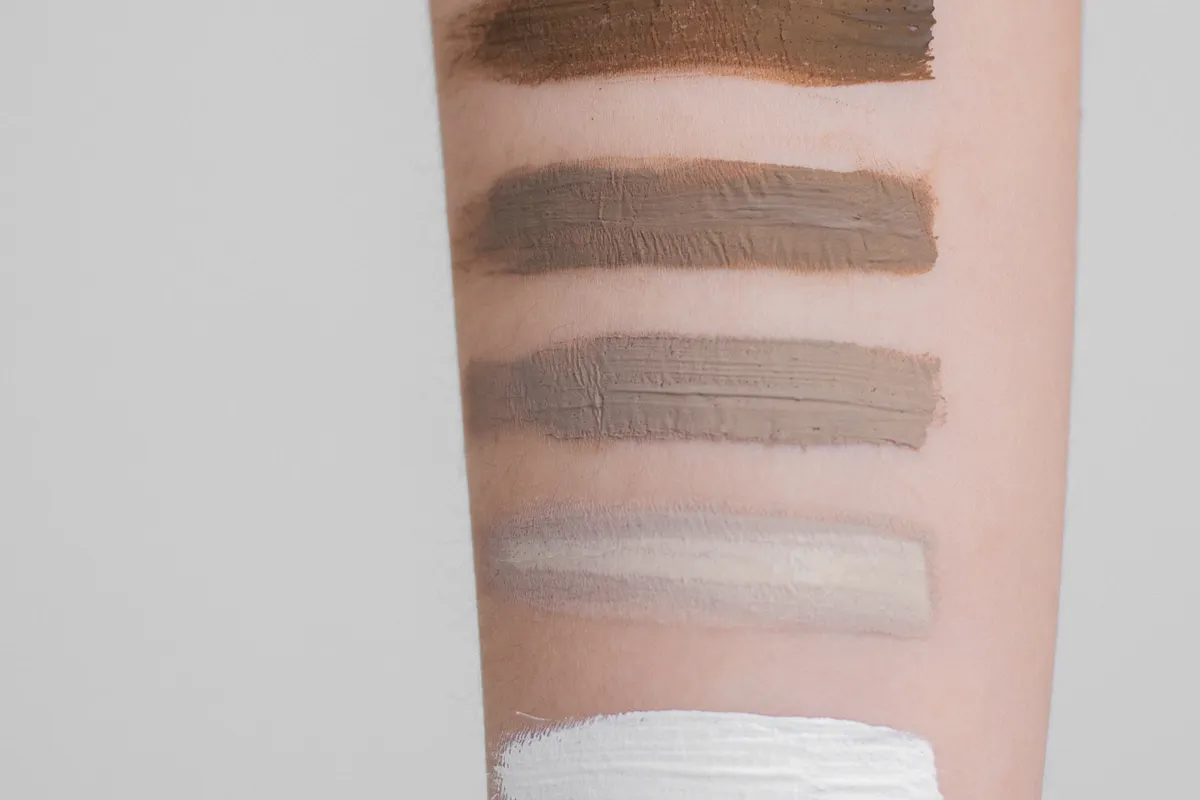
One more thing worth saying out loud: you may not need foundation at all. A concealer where you want cover and nothing anywhere else is a perfectly complete base, and it is the version that looks like skin in daylight. Full coverage foundation is the single most common thing beginners buy first and regret.
Which Colours Suit My Colouring?
Once the base is sorted, colour choice comes down to two things: your undertone, and the contrast between your hair, eyes and skin.
For lips and cheeks, undertone leads. Cool skin takes blue-based reds, berry, raspberry and true pink, and tends to look ashy in orange-browns. Warm skin takes coral, brick, terracotta and warm brown, and can look washed out in an icy pink. Olive skin sits comfortably in warm neutrals, brick reds and dusty roses, and is the one colouring that often looks better in a slightly muted shade than a bright one. Neutral skin, annoyingly for everyone else, can wear most of it.
For eyeshadow, the colour wheel is more useful than your undertone. Shades sitting opposite your eye colour create contrast, which is what makes the iris read as more saturated.
- Blue eyes pick up copper, bronze, terracotta, warm brown and peach, all of which sit opposite blue on the wheel. Cool grey shadow on blue eyes is the classic mistake, since it matches rather than contrasts.
- Green eyes pick up plum, mauve, red-violet, rust and warm burgundy. Purple is the reliable one and a soft plum on the lash line does the job with no blending skill required.
- Hazel eyes respond to whichever part you want to pull forward. Greens and plums bring out the green flecks, golds and coppers bring out the brown.
- Brown eyes take almost anything, which is less useful advice than it sounds. For contrast, navy, emerald and deep purple work hardest. For warmth, gold and bronze.
- Grey eyes go bluer with copper and warmer browns, and stay properly grey with charcoal and slate.
Then there is contrast. If your hair, skin and eyes are close in depth, strong pigment tends to take over the face, and soft, muted colour looks balanced. If there is a lot of difference between them, muted colour disappears and you can carry a defined lip or a dark liner without it wearing you. This is the single most useful idea in colour analysis and it costs nothing to apply.
Which brings us to the seasons. The twelve season system is everywhere at the moment and the four broad families it is built on are genuinely useful. Pinning yourself to a specific subtype from a phone selfie is not. Neighbouring types such as Soft Summer and Soft Autumn differ by less than most home lighting varies, and dyed hair, existing makeup and the colour of your bathroom walls all skew the read. Treat "warm and muted" as the takeaway and leave the subtype to someone who drapes you in person.
Try it with NeonSnap
See the colours on your own face first
Reading that copper suits blue eyes is one thing. Seeing it on your face is another. NeonSnap's free AI Makeup Change tool applies different looks to your own photo, so you can put a terracotta eye next to a plum one and judge with your eyes instead of a chart.
Try AI Makeup Change free →Where Should Blush Go on My Face?
Blush is the product with the biggest gap between "right shade" and "right result", because placement changes the shape of a face more than colour does. The standard advice to smile and dab it on the apples suits exactly one face shape.
Round faces
Go higher and further back. Start near the top of the cheekbone and sweep the colour towards the temple in a line rather than a circle, which gives the cheekbone somewhere to read. Blush placed low on the apples of a round face emphasises the width you are working around.
Long or oblong faces
Stay on the apples and blend outward horizontally towards the ears. Resist dragging the colour up to the temple, which stretches the face further. Horizontal placement is what makes a long face read shorter and fuller, and it is the one case where the traditional smile-and-dab method is correct.
Heart shaped faces
Sit the colour slightly below the apples and blend out towards the ears. That pulls attention down and away from a wider forehead and towards the middle of the face, which balances a narrower chin.
Square and angular faces
Round the placement deliberately. A soft circular blend on the apples, blended up just slightly, softens a strong jaw far more gently than contour does. Cream formulas suit this better than powder because the edges disappear.
The technique dominating autumn 2026 is blush draping, which is the seventies version brought back: a cool-toned blush laid high on the cheekbone and swept up in an arc towards the temple, rather than kept in a patch. The version that looks like skin rather than stage makeup uses a cream blush first for colour and a light dusting of powder blush over the top to soften the edge. It suits rounder and squarer faces particularly well, and it is one to be careful with on a long face.
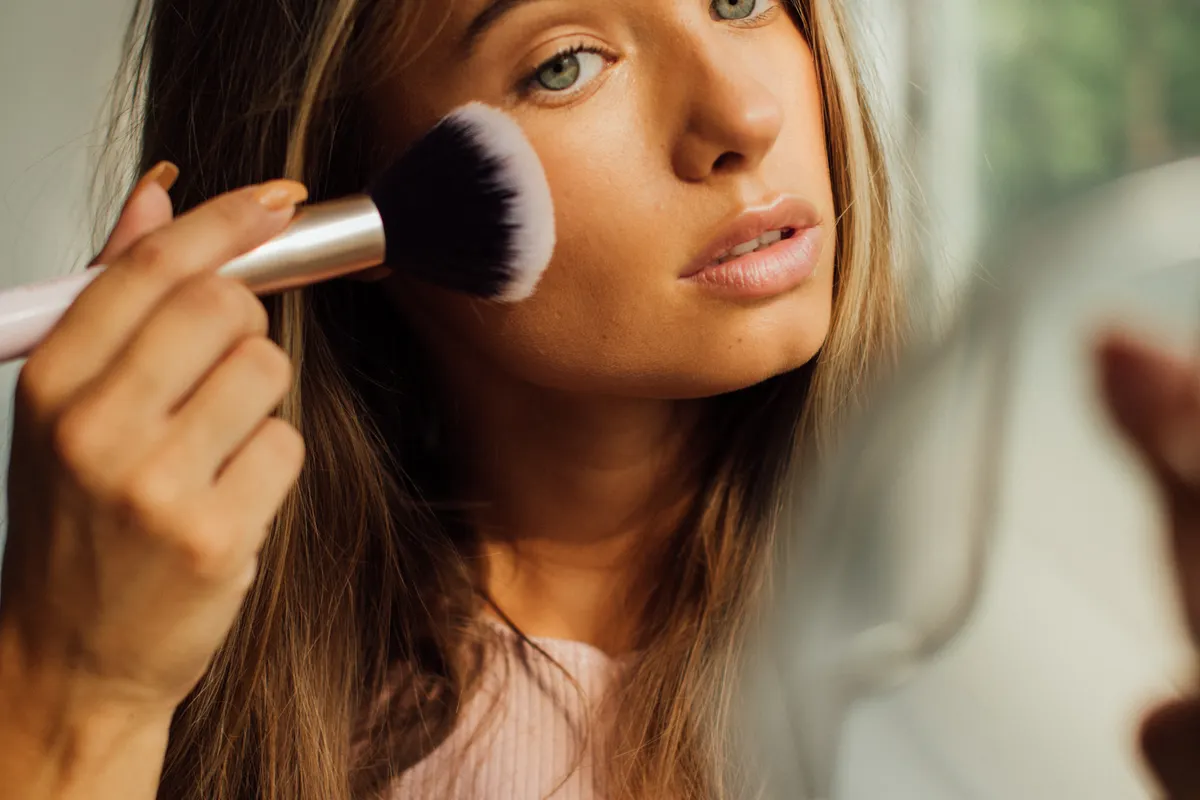
Whatever the shape, use less than you think and build. Cream blush in particular deepens over the first minute as it settles into the skin, so the amount that looks right the instant it goes on is usually too much.
What Should I Buy First?
A beginner kit needs to solve ordinary problems: tired eyes, uneven redness, flat cheeks, pale lips and eyebrows doing their own thing. Seven items cover it.
- A moisturiser with SPF. Makeup sits badly on dry skin, and nothing you buy afterwards will fix that.
- Concealer or a light skin tint rather than full coverage foundation. Cover what bothers you, leave the rest.
- One cream blush. Cream is more forgiving than powder because it blends with fingers and has no hard edge to fix.
- A brow gel. Tidy brows change a face more than eyeshadow does, and a clear or tinted gel takes ten seconds.
- A mascara that does not clump. Curl the lashes first if you own a curler. That does more than the mascara.
- A tinted lip balm or gloss. Glossy lips are firmly back for 2026, and a balm is far more forgiving than a matte lipstick when you are still learning your lip shape.
- One damp sponge. A single sponge, used damp and squeezed out, handles base, concealer and cream blush.
What to leave on the shelf for now: full coverage foundation, contour palettes, liquid eyeliner, false lashes, heavy bronzer, setting powder used everywhere, and any palette with twelve shades you will never touch. Every one of those is a skill purchase, and buying skills before you have them is how people end up convinced makeup does not suit them.
How Do I Find My Makeup Style?
Colours and placement get you a face that works. Style is the separate question of how much of it you want to be wearing, and it is mostly decided by your life rather than your bone structure.
Think of it as three registers. Bare is skin, brows, lashes and a balm, done in four minutes, and it is what most people want on most days. Polished adds blush, a little definition and a lip with actual colour, takes about ten minutes, and is the register for work, dinner and anything photographed. Done is a defined eye or a strong lip, twenty minutes or more, and is for when the makeup is part of the point. Knowing which one you are aiming for stops you buying for a version of yourself who has forty spare minutes.
Inside any register, pick one feature to lead with. Eyes or lips, not both at full volume. A strong eye and a strong lip at once is a specific choice that reads as costume unless you mean it. The clean girl look is the current template for leading with skin, and the coquette look is the template for leading with blush and a glossy stained lip, if you want two worked examples pointing in different directions.
The test for whether something suits you is simple and slightly annoying: wear it for a full day and look at a photo taken by someone else, in daylight, around mid afternoon. A bathroom mirror is a far more forgiving judge than a camera is. If you keep catching your own eye in shop windows and liking it, that is your answer. If you spend the day slightly aware of your face, it is not your look, whatever the colour wheel says.
What About the 2026 Trends?
Autumn 2026 is running on soft focus skin, glossy lips, cool-toned nostalgia and statement eyes, which in practice means less coverage on the base and more attention on one feature. The base trend is easy to adopt and genuinely flattering on most people: a serum foundation or skin tint, set lightly or not at all, so the skin looks softened rather than blank. Think film photograph rather than filter.
The rest is worth treating as a menu. Take one thing per season and ignore the rest. A trend is a good test of a technique you might keep, and a poor reason to replace products that already work. Glossy lips came back, so a tinted gloss is a cheap enough experiment. Blush draping came back, so try it on a weekend before you wear it to work.
If you are photographing any of this, the lighting will do more to the result than the makeup will. Our guide on how to look good in photos covers the part that no product can fix.
lightbulb
Trying to decide between a warm eye and a cool one, or whether a bold lip is your thing at all? NeonSnap's AI Makeup Change tool puts both on your own photo in seconds, which is a faster and cheaper comparison than two trips to a counter.
Frequently Asked Questions
How do I know what makeup suits me?
Answer three separate questions rather than one. Your undertone, warm, cool, neutral or olive, decides your foundation and your best reds and pinks. The contrast between your hair, skin and eyes decides how strong the colours can be before they wear you. Your face shape decides where blush and definition go. Most people who feel that makeup does not suit them have the right products in the wrong places, or a base half a shade too warm.
How do I find my skin undertone?
Take off any makeup, stand by a window and hold a sheet of white paper next to your bare face. Skin that looks pinkish or slightly blue against the paper is cool, skin that looks yellow or golden is warm, skin that looks greenish is olive, and skin that looks neither is neutral. Then hold silver and gold fabric or jewellery under your chin and see which one makes your face look clearer. The wrist vein test is the popular one and the least reliable, especially on deeper skin where the veins are harder to read.
How do I match foundation properly?
Swipe three neighbouring shades in stripes along your jawline, blend the lower edge of each one down onto your neck, then walk to a window. Daylight, not shop lighting and not your phone screen. Wait a couple of minutes, because many formulas deepen slightly as they oxidise. The right shade is the one that disappears, with no line at the jaw, no orange cast and no grey film. If none of them vanish, mix two.
What makeup should a beginner buy first?
A moisturiser with SPF, a concealer or light skin tint rather than full coverage foundation, one cream blush, a brow gel, a mascara that does not clump, a tinted lip balm and one sponge. That is seven items and it covers almost every ordinary day. Leave contour palettes, liquid eyeliner, false lashes, strong bronzer and twelve pan eyeshadow palettes until you know what you reach for.
Where should I put blush for my face shape?
On a rounder face, place it higher and sweep it back along the cheekbone towards the temple rather than circling the apples. On a longer face, keep it on the apples and blend outward horizontally, because dragging colour upward makes the face read longer. On a heart shaped face, sit it slightly below the apples and blend out towards the ears to pull attention away from a wider forehead. Start with less than you think and build, since cream blush deepens as it settles.
Can I see what makeup suits me before buying it?
Yes. NeonSnap's free AI Makeup Change tool applies different looks to a photo of your own face, so you can compare a warm terracotta eye against a cool plum one, or a bold lip against a bare one, on your own colouring. It is not a substitute for swatching a foundation on your jaw, but it settles the colour questions in a couple of minutes.
See what suits you before you spend anything.
NeonSnap's free AI Makeup Change tool puts different looks on your own photo, so you can compare colours on your face instead of on a chart.
Try AI Makeup Change free